Docs · how PACKSPAD works
The rules.
Every coin launched here is a binder. Its fees buy real sealed packs of the set it picked; the packs are ripped on stream and every card is logged; the hits are vaulted and minted on Solana; every holder owns a slice. This is the long version: where the money goes, who holds the cards, what you can check on chain yourself, and what can go wrong.
- Split
- 90 / 10, locked at birth
- Launch
- free: our treasury pays
- Packs
- real, sealed, receipts posted
- Hits
- vaulted, minted, owned by the binder
- Payouts
- none: sales rip more packs
PACKSPAD
THE RULES · ONE COPY
- 90% of fees
- the binder
- 10% of fees
- PACKSPAD
- the split
- locked at birth
- a launch
- free
- the packs
- real, sealed
- every order
- a receipt
- every rip
- on stream
- every card
- logged
- the hits
- vaulted, minted
- your slice
- your % of supply
- sell a hit?
- holders vote
- the money
- more packs
- payouts
- none
NOT FINANCIAL ADVICE$0.00
KEEP THIS FOR YOUR RECORDS
A launch is free.
You name a coin, give it a ticker and a picture, add links if you like, and pick what it rips: the real Pokémon TCG set whose sealed booster packs its fees will buy. Our treasury pays the launch on pump.fun, so it costs you nothing, and your coin is a normal pump.fun coin: it trades on pump.fun’s bonding curve and graduates like any other.
At birth the coin gets its binder: a page at /b/<id>, a wallet of its own, and our pack print with your ticker on it. The set is fixed at birth. A wallet is optional; if you are signed in, it is recorded as the coin’s launcher (and the coin shows on your page). It is not paid. Launches stay closed while the site is in preview or the treasury is low, and they are limited per person and per day.
| What it can rip | Pack price | Cards | Volume per pack |
|---|---|---|---|
 30th CelebrationMega Evolution · 2026 | ~$19.99 est. | 10 | $7,404 |
 Pitch BlackMega Evolution · 2026 | ~$5.49 est. | 10 | $2,033 |
 Ascended HeroesMega Evolution · 2026 | ~$6.99 est. | 10 | $2,589 |
 Prismatic EvolutionsScarlet & Violet · 2025 | ~$13.85 market | 10 | $5,130 |
 Surging SparksScarlet & Violet · 2024 | ~$8.68 market | 10 | $3,215 |
 151Scarlet & Violet · 2023 | ~$28.63 market | 10 | $10,604 |
 Evolving SkiesSword & Shield · 2021 | ~$43.82 market | 10 | $16,230 |
 Base Set (Unlimited)Base · 1999 | ~$480.00 est. | 11 | $177,778 |
Volume per pack = how much the coin must trade for its binder to afford one pack, at a 0.30% creator fee and the 90% binder share. Pack prices are estimates until real receipts exist; then they are the running average of what we actually paid.
90% buys packs. Locked.
pump.fun charges a creator fee on every trade of a coin: 0.30% of the trade today (the strip at the top of this page shows the rate this deployment reads). In the transaction that creates your coin, our rail writes pump.fun’s fee-sharing config for it: 90% of the creator fees to the coin’s own binder wallet, 10% to PACKSPAD.
Why it cannot change: pump.fun’s program accepts a coin’s fee-sharing config once. A second write is refused by the program itself, for us too. Nobody can raise our share, lower the binder’s, or point the fees somewhere else after birth. You can read the config on chain (see On chain, and off).
The fees collect in pump.fun’s program until they are paid out. A crank pays them out every 10 minutes; each payout is a transaction and a line on the public record. The binder’s share lands in its wallet, and that is what buys the packs.
From a fee to a card in the vault.
Everything that happens to a binder is one loop. Every step leaves a public line on the record, most of them with a transaction.
Money only moves in three places: fees land in the binder wallet (pump.fun’s payout), an order pays the buy desk from the binder wallet (one transfer, memo packpad:order:<id>), and a sale’s proceeds come back into the binder wallet. Everything in between is cards: bought, ripped, logged, photographed, graded, vaulted and minted.
Every pack has a receipt.
Every 5 minutes a planner looks at each live binder. When its wallet can afford at least 6 packs of its set (after the account’s rent and a small reserve for network fees, at the live SOL price), it plans one order: as many packs as the balance buys. A binder never has two open orders.
- 01plannedthe planner: balance covers 6+ packs
- 02paidSOL out of the binder wallet · memo packpad:order:<id> · tx
- 03boughtseller, USD total, receipt photo
- 04receivedthe sealed packs are in hand
- 05rippedin a rip session, on stream
- 06loggedevery card on the record
Paying an order is one transfer from the binder wallet to our buy desk, at most 25 SOL at a time, with the order number in the memo, booked before it is sent so a retry can never pay twice. Then we buy the sealed packs from a real seller and post the receipt: the seller, the total in dollars, a photo. Once the packs are in hand they wait for a rip session.
Ripped on stream.
Packs are opened live, in a rip session: a stream with a title, a time and a link, announced ahead on the site. While it is on air the site shows a red LIVE tag; afterwards the session keeps its recording.
Every card that comes out is logged as a pull, pack by pack, slot by slot: the real card (set and number, from the Pokémon TCG catalog), its finish (normal, holo or reverse holo), its TCGplayer market price, and the second of the recording it came out at. A binder’s value is its cards at market plus its sealed packs at cost.
Pulls are typed in by our team from the recording, checked against the set’s card list. A card that is not in the set cannot be logged.
Hits go to the vault. Commons go in the box.
A pull is a hit when its rarity is above the set’s everyday rarities (Double Rare, Ultra Rare, Illustration Rare, Special Illustration Rare, Hyper Rare, the V / VMAX / Rainbow / Secret rares, a Base Set holo) or when it is worth $20 or more. Hits get a platform-wide number (PULL #0214), a vault slot and an NFT. Everything else goes in the binder’s bulk box: counted, kept, valued, not minted.
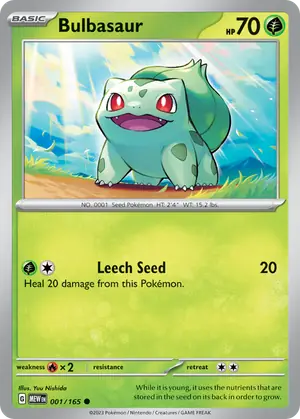
Bulk box
Bulbasaur151 1/165 · Common · $0.29a common
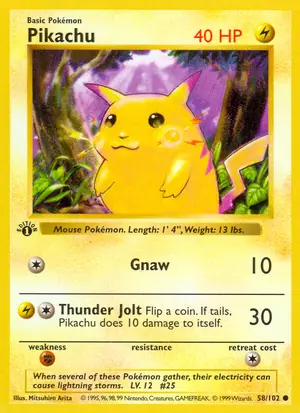
Bulk box
PikachuBase Set 58/102 · Common · $10.56a common under $20
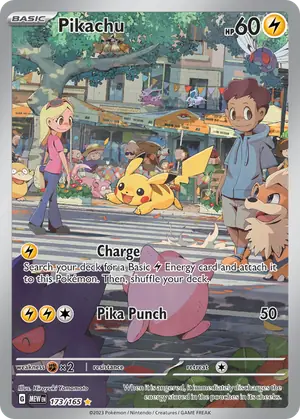
Hit · vaulted raw
Pikachu151 173/165 · Illustration Rare · $66.17Illustration Rare
Hit · graded
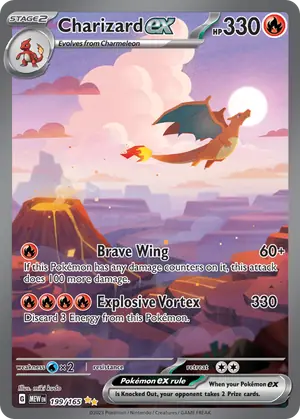
Charizard ex151 199/165 · Special Illustration Rare · $323worth $150+
Hit · graded
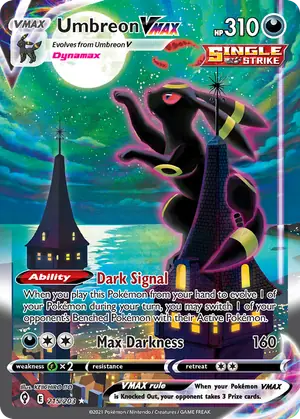
Umbreon VMAXEvolving Skies 215/203 · Rare Rainbow · $2,265the chase card
Real cards from the catalog with their TCGplayer market prices. Where each one would go if a binder pulled it.
Who holds the cards.
We do. The cards are physical, so somebody has to: PACKSPAD’s team keeps every binder’s cards, in the binder’s name, in one vault. Each hit is photographed front and back the day it is pulled, sleeved, and given a vault slot (A-04-12); hits worth $150 or more are sent to a grader (PSA or CGC) and come back slabbed, with a certificate number you can look up on the grader’s own site. The vault is insured.
- Pulled on streamthe minute is logged
- Photographedfront and back
- Sleevedtop loader, raw
- GradedPSA / CGC, if worth $150+
- Vaulteda slot, insured
- MintedNFT owned by the binder
The cards belong to the binder, not to any one holder: you cannot take a card out, and nobody can redeem a slice for a card. A card leaves the vault only when a sell vote passes, and then the money goes back into the binder. Every slab’s page shows its photos, its slot, its grade and its NFT.
Minted on Solana.
Every hit is minted as an NFT (a Metaplex Core asset) in its binder’s collection, owned by the binder wallet, never by a person. It carries the card’s facts: set, number, rarity, finish, grader, grade, certificate, vault slot, when and in which session it was pulled, the binder, and its market value, with the vault photo as its image. When a card comes back from grading, its NFT is updated.
The NFT is the public record of the card: who owns it (the binder), what it is and where it sits. It is not a claim ticket and it cannot be sent anywhere. Minting has its own switch too; until it is on, hits are vaulted and logged and wait to be minted.
Sell a hit, rip more packs.
Holders can vote to sell a hit. A vote is opened by us or by any holder with 1% or more of the binder; it names one slab and an asking price (by default, its value).
- 01Opened
a hit, an ask price, 48 h. The snapshot is taken now: buying mid-vote adds no weight.
- 02Ballots
Holders sign a message: yes or no. Weight = their slice at the opening snapshot. Changeable until close.
- 03Closed
Passes when yes beats no and turnout is at least 20% of the binder.
- 04Sold
We sell the card and post the buyer, the price and the proof.
- 05More packs
The proceeds land back in the binder wallet. The planner turns them into packs. Nothing is paid out.
Nothing is ever paid out to holders. A sale turns one card back into SOL in the binder wallet, and the planner turns that SOL into more packs of the same set. The binder’s value moves from one card to whatever those packs hold.
On chain, and off.
Money and ownership are on Solana, where anyone can read them. The physical part (buying, ripping, grading, storing) happens off chain, and we post the proof for each step.
| What | Where | How to check it |
|---|---|---|
| The coin | on chain | A pump.fun coin created by our treasury: its mint on pump.fun and Solscan. |
| The 90 / 10 split | on chain | pump.fun's fee-sharing config for that mint: the binder wallet at 9,000 basis points, the house at 1,000. Written in the birth transaction. |
| Fees in | on chain | The crank's payouts into the binder wallet, each a transaction and a line on /ledger. |
| Orders paid | on chain | A transfer from the binder wallet to the buy desk with the memo packpad:order:<id>. |
| Card NFTs | on chain | Core assets in the binder's collection, owned by the binder wallet. |
| Share NFTs | on chain | One per holder per binder, frozen to the holder's wallet. |
| Sale proceeds | on chain | SOL back into the binder wallet. |
| Receipts | off chain | Seller, total and photo, posted with the order. |
| Rip sessions | off chain | The stream and its recording. |
| Pulls | off chain | Our log, card by card, with the second of the recording. |
| Grades | off chain | The certificate number, on the grader's own site. |
| Vault slots + photos | off chain | On each slab's page and in its NFT. |
| Votes | off chain | Ballots are signed messages; we count them and post the result. |
Odds and prices, honestly.
Card prices are TCGplayer market prices from the Pokémon TCG API, refreshed daily. A card with no listed price is valued at nothing (“price pending”), never at a guess. Graded cards are valued at graded comps when we have them, else at the raw market.
Pack prices are estimates until a binder’s first receipt; after that they are the running average of what we actually paid. They are always marked: est. or receipts.
The rip toy on the home page and at /rip is a simulation. It deals real cards of the set, with pull rates that approximate published and community pull-rate studies for each era. It is not what a real pack will hold, and it says so on screen.
| Set | Cards | Where the hits are (approximate odds per pack) |
|---|---|---|
| Prismatic Evolutions | 10 | slot 9Special Illustration Rare 1 in 45Hyper Rare 1 in 180slot 10Double Rare 20%Ultra Rare 1 in 13 |
| 151 | 10 | slot 9Illustration Rare 1 in 12Special Illustration Rare 1 in 32Hyper Rare 1 in 54slot 10Double Rare 13%Ultra Rare 1 in 16 |
| Evolving Skies | 10 | slot 10Rare Holo V 19%Rare Holo VMAX 12%Rare Ultra 1 in 18Rare Rainbow 1 in 40Rare Secret 1 in 100 |
| Base Set (Unlimited) | 11 | slot 11Rare Holo 33% |
The simulator’s weights for the slots that can hold a hit (approximate). Real pull rates vary by print run and are not published by the manufacturer.
Read the record.
Everything the site shows comes from public, read-only JSON: no key, no sign-in. Answers are cached for 5 to 15 seconds; poll the pull feed every 5 to 8 seconds, not faster. SOL amounts are strings of lamports (1 SOL = 1,000,000,000), card and pack prices are dollars, slices are basis points (10,000 = 100%). The shapes are in src/lib/domain.ts and src/lib/types.ts.
| GET /api/stats | Platform totals, the split in force, launches open or not, the next rip session. |
|---|---|
| GET /api/binders?sort=value|new|hot&set=&limit=&cursor= | Every binder, a page at a time. |
| GET /api/binder/<id> | One binder in full: wallet, fees in, spent, packs, value, set progress, links. |
| GET /api/binder/<id>/pulls · /orders · /holders · /votes | Its pulls, its orders with receipts, its holders' slices, its votes. |
| GET /api/pulls?since=&limit= | The live feed of pulls across every binder. |
| GET /api/orders | Every order: packs, dollars, the payment's transaction, the receipt. |
| GET /api/sessions | Rip sessions: scheduled, live, recorded. |
| GET /api/vault?grader=&set=&binder= | Every slab: grade, certificate, slot, photos, NFT. |
| GET /api/record?kind=&binder=&before= | The public record: every fee, order, receipt, session, pull, slab, mint, snapshot, vote and sale. |
| GET /api/sets | The sets a coin can rip, with pack prices and where they come from. |
| GET /api/me | Signed in: your slices, your share NFTs, your votes. |
# the five newest pulls on the site
curl -s "$SITE/api/pulls?limit=5"

# one binder, in full
curl -s "$SITE/api/binder/zard"What can go wrong.
- We hold the cards. They sit in our vault, insured, photographed and logged, but you are trusting PACKSPAD to keep them, to keep the records honest and to keep operating. The rules here are enforced by our code and our team, not by an on-chain program.
- Our servers hold the keys. Each binder wallet is derived from a secret seed on our servers. If that seed leaks, or the operators stop operating, the SOL in the wallets is at risk.
- Packs are a gamble. Most packs are worth less than they cost. A pack can be all commons. A binder's value can be far below what its fees paid for.
- Card prices move. Market prices go down as well as up, and a market price is not a price anyone will pay you.
- Things take time. Buying, shipping, ripping and grading take days to months. A pulled card can be lost or damaged in transit; insurance pays its value back into the binder.
- The coin can go to zero. Your slice is a slice of the binder, but the coin itself trades on its own, and most coins die.
- pump.fun sets the fee and runs the programs. Its creator fee rate can change, and so can its programs. The lock fixes who is paid, not how much.
- Spending and minting are switched on by the operator. Until they are armed, fees wait in the binder wallets and hits wait to be minted.
- Software has bugs. This site, pump.fun, Solana and the price feeds it reads are all software. Assume some of it is wrong.
- Rules differ by country. What owning a memecoin, an NFT or a slice of anything means depends on where you live. Check yours.
Questions.
Who holds the cards?
PACKSPAD's team, in one insured vault, in each binder's name. Every hit is photographed front and back, has a vault slot, and (when it is worth grading) a grader's certificate.
Can I take my card out?
No. The cards belong to the binder, and your slice is a share of the whole binder, not a claim on one card. A card leaves the vault only when a sell vote passes.
Can the 90/10 split change?
No. pump.fun's fee-sharing program takes the split once, at birth, and refuses a second write. That holds for us too.
What if the coin dies?
The binder keeps what it has: its cards stay vaulted and minted, its slices stay as they were at the last snapshot. With no trading there are no new fees, so no new packs.
Who decides what to buy, and where?
The set is fixed when the coin is launched. We buy sealed packs of that set from real sellers at the best price we can find, and post every receipt.
How do I know a pull is real?
Every pull points to the second of the stream it came out at, every hit has front and back photos and a vault slot, every graded card has a certificate you can look up, and every hit is an NFT owned by the binder.
Are the rip toy's odds real?
No. It deals real cards with approximate pull rates. It is a toy, and it says so.
Do I get paid?
No. Nothing is paid out to holders. If a hit is sold, the money buys more packs for the same binder.
Is this an investment?
No. It is a memecoin whose fees buy trading cards. Nothing here promises value, and nothing here is financial advice.
Are you Pokémon?
PACKSPAD is not affiliated with, endorsed or sponsored by Nintendo, The Pokémon Company, Creatures or GAME FREAK. Pokémon and card images are trademarks of their respective owners, shown to identify the real cards we buy.
Words.
- Basis point (bps)
- A hundredth of a percent. 9,000 bps is 90%.
- Binder
- Everything one coin's fees bought: its wallet, its sealed packs, its cards, its NFTs. One per coin.
- Binder wallet
- The coin's own wallet, derived for its mint. Receives 90% of its creator fees and pays for its packs.
- Bulk box
- Where a binder's commons and uncommons go: counted and valued, not minted.
- Creator fee
- The slice pump.fun takes from every trade of a coin and pays to the coin's fee-sharing config.
- Fee-sharing config
- pump.fun's record of who receives a coin's creator fees. Written once.
- Finish
- How a card is printed: normal, holo, or reverse holo.
- Hit
- A pull rare enough or valuable enough to be vaulted and minted.
- Lamport
- The smallest unit of SOL. 1 SOL is 1,000,000,000 lamports.
- Order
- Packs bought with a binder's SOL: planned, paid, bought, received, ripped, logged.
- Pull
- One card out of one pack, logged with its set, number, finish, price and minute.
- Rip session
- A stream where packs are opened.
- Share NFT
- The NFT that records your slice of a binder. Frozen to your wallet.
- Slab
- A graded card in its sealed case. On PACKSPAD, also any vaulted hit's record.
- Slice
- Your share of a binder: your share of its coin's circulating supply.
- Snapshot
- A reading of every holder's balance, which sets the slices.